Dance Suite
Definition
a set of dance-inspired movements composed for solo instruments, small groups, or orchestra
played in private homes or at court for entertainment
made up of movements that are all written in the same key but differ in tempo, meter, and character
common dance types: allemande, courante, gavotte, bourrée, sarabande, minuet, gigue
French Overture
a piece heard at the beginning of Baroque oratorios and operas
consists of two contrasting sections:
1. a slow section with dotted rhythms that is full of dignity and grandeur
2. a faster (and lighter) section that features imitative entries (as in a fugue)
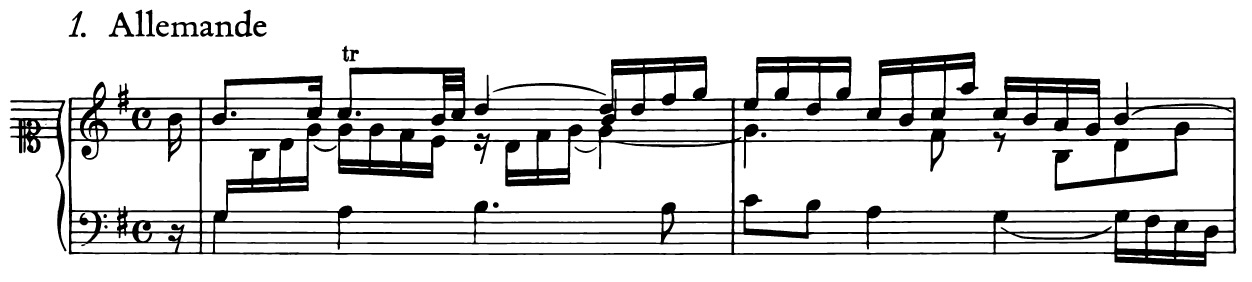
Allemande
French word for “German”
• Origin: Germany
• Tempo: moderately fast
• Meter: 4/4 meter
• Characteristic: begin with a pickup
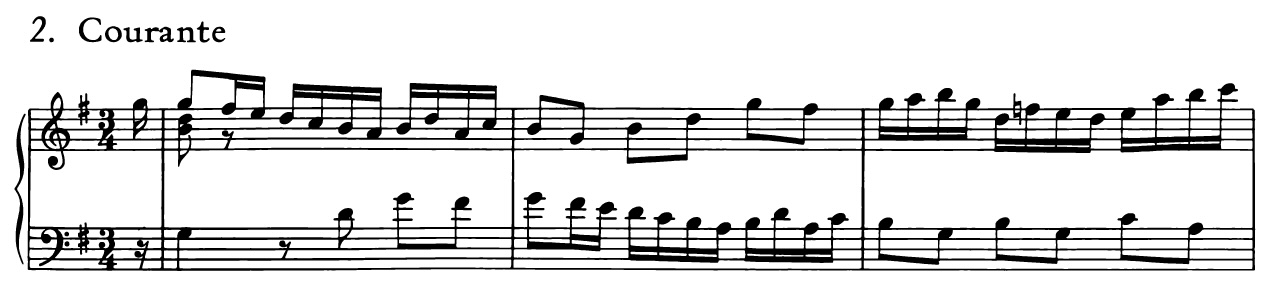
Courante
French word for “running” or “flowing”
• Origin: France
• Tempo: moderately fast
• Meter: triple or compound meter (3/4 or 6/4)
• Characteristic: begin with a pickup
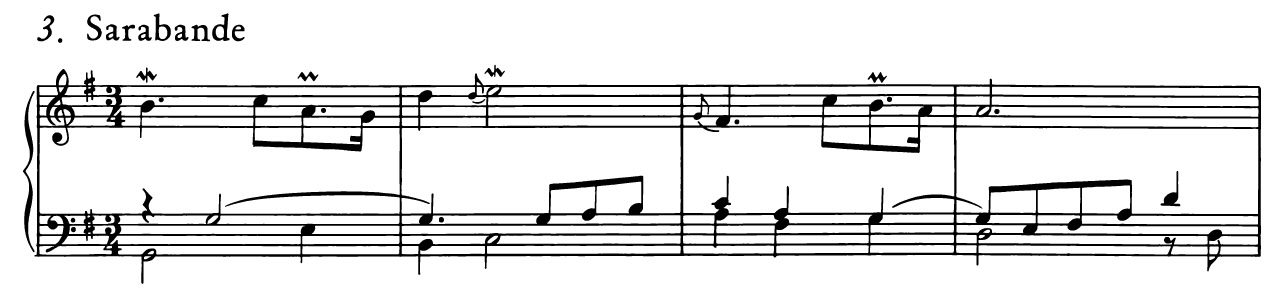
Sarabande
• Origin: Spain
• Tempo: slow and dignified
• Meter: triple meter (3/4)
• Characteristic: accented on the second beat
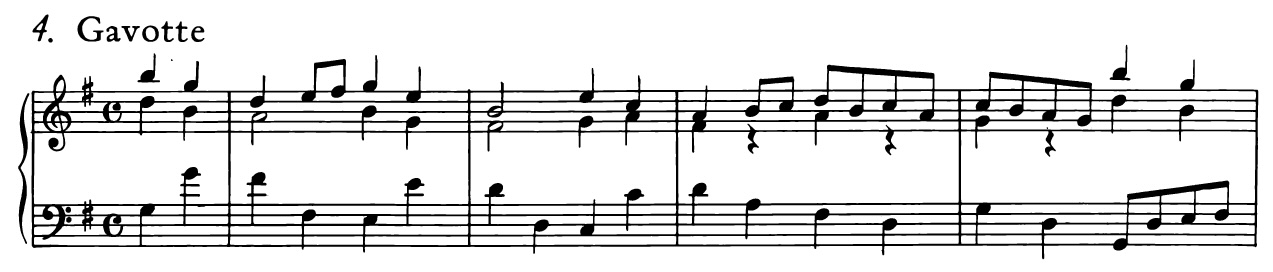
Gavotte
• Origin: France
• Tempo: moderate
• Meter: duple or quadruple meter (2/2 or 4/4)
• Characteristic: begin with a half-measure pickup
Bourrée
• Origin: France
• Tempo: moderate
• Meter: duple or quadruple meter (2/2 or 4/4)
• Characteristic: begin with one-beat pickup

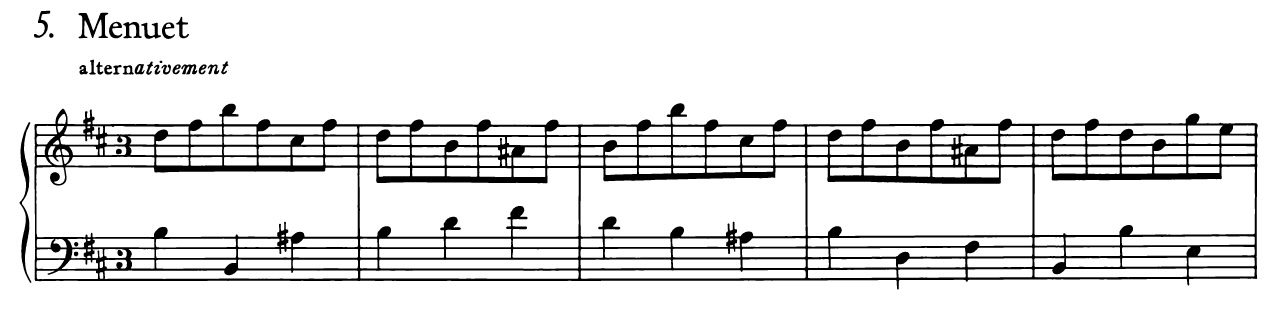
Minuet
• Origin: France
• Tempo: moderate
• Meter: triple meter (3/4)
• Characteristic: no pickup
Gigue
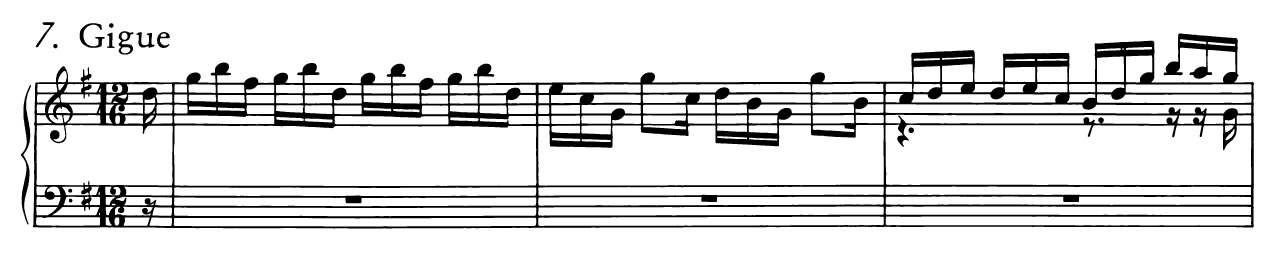
• Origin: England
• Tempo: fast
• Meter: compound meter (6/4 or 12/8)
• Characteristic: each section begins with imitative entries like a fugue
Listening
J. S. Bach, Orchestral Suite No. 3, BWV 1068 (1725)
First Movement: Overture
Suite No. 3 in D Major—scored for two oboes, three trumpets, timpani, strings, and basso continuo—opens with a majestic French overture, which exploits the bright sounds of trumpets. After a slow opening section with dotted rhythms, we hear the energetic fast section. This begins like a fugue, with an upward-moving theme introduced by the first violins and then imitated by the other instruments.
The fast section is like a concerto grosso in its alternation of solid tutti passages with lightly scored passages highlighting the first violins. After the fast section, the slow tempo, dotted rhythms, and majestic mood of the opening return.
0:10 Slow section, featuring dotted rhythm; majectic and solemn, evocative of a royal procession and a march; the texture is predominantly homophonic, with the main melody performed by the violins
1:19 Repeat of the slow section
2:25 Fast section, featuring imitative entries; different musical ideas from various insturments are combined; the mood is lively and jubilant; the texture alternates between polyphonic and homophonic; the music moves through different keys
5:21 Return of the slow section, rounding off the French overture
Second Movement: Air
The second movement, the Air, contains one of Bach’s best-loved melodies. It is scored for only strings and continuo and is serene and lyrical, in contrast to the majestic and then bustling French overture. The title suggests that the movement is written in the style of an Italian aria. Like the opening movement, the Air is not related to dance. It is in A A B B form, with the B section twice as long as the A section. The Air combines a steadily moving bass (which proceeds in upward and downward octave leaps) with a rhapsodic and rhythmically irregular melody in the violins.
6:20 A section: rhapsodic and lyrical melody over a regularly moving cello line ("walking bass"); strings only.
7:02 A section repeated.
7:45 B section: longer, with melodic phrases embellished and treated in sequence.
9:11 B section repeated.
Third Movement: Gavotte
All the movements that follow the Overture and the Air are inspired by dance, beginning with the Gavotte, which is written in duple meter and in a moderate tempo and uses the full orchestra again. It may be outlined as follows: gavotte I (A A B B); gavotte II (C C D D); gavotte I (A B). Notice the contrast between the sections for full orchestra and those without trumpets and timpani.
Fourth Movement: Bourrée
The Bourrée is an even livelier dance, also in duple meter; it is the shortest movement of the suite. Its form is A A B B. Section A uses the full orchestra, including trumpets and timpani. Section B is three times as long as section A and alternates loud tutti passages with softer passages for strings and oboes.
Fifth Movement: Gigue
The suite concludes with a rollicking gigue in 6/8 time, which is also in the form A A B B. Here, Bach’s manner is simple and direct. Listen for the splendid effect when timpani and trumpets periodically join the rest of the orchestra.
15:03 A section: vigorous dance with continuous motion as the strings and oboes exchange musical phrases with the trumpets; compound meter (12/8)
15:29 A section repeated.
15:54 B section: longer, with some development of musical ideas as the music modulates (returns) to the tonic key.
16:45 B section repeated.